
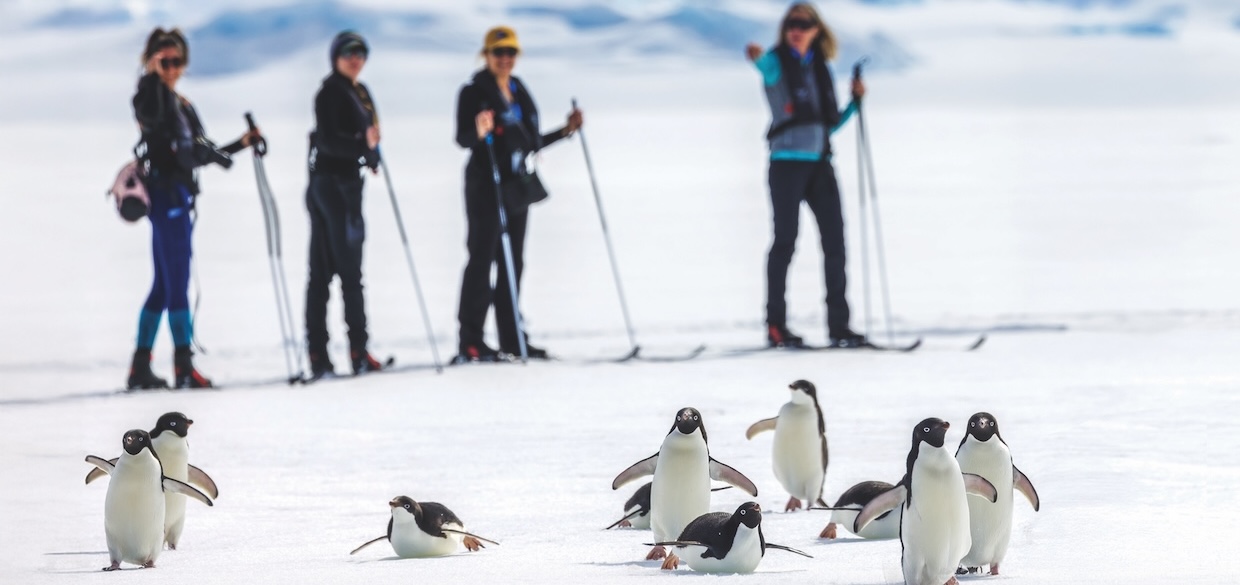
Few places on Earth inspire such wonder and awe as Antarctica. This vast, remote continent is almost untouched by humans. The White Continent remains one of the planet’s final frontiers.
Towering glaciers and colossal icebergs shape the land. Snow-covered mountains and unique wildlife make for a singular landscape. For many, visiting Antarctica is the ultimate adventure—a journey so remote that few experience it firsthand.
Despite its isolation, Antarctica is surprisingly accessible. Interest in polar exploration is growing. Carefully regulated expedition cruises now let travelers explore this remarkable region safely and responsibly. These journeys also help preserve one of the world’s most fragile environments.
For travelers seeking immersive discovery, breathtaking natural beauty, and a new perspective on the world, few journeys compare to an Antarctic expedition.
Why an Expedition Cruise Is the Best Way to Visit Antarctica
Antarctica has no cities, resorts, roads, or permanent residents. International agreements protect the continent, prioritizing research and preservation.
Expedition cruising is now the main way visitors explore Antarctica.
Small expedition vessels are built for polar waters. They let guests explore coastlines, islands, and wildlife under strict environmental rules.
These voyages combine adventure with education, offering an immersive experience as travelers explore Antarctica alongside naturalists, marine biologists, historians, glaciologists, and polar specialists who bring the region’s remarkable landscapes and wildlife to life.
Highlights of this immersive discovery experience include:
- Access to remote regions of the Antarctic Peninsula
- Daily guided landings when conditions permit
- Zodiac excursions among glaciers and icebergs
- Wildlife viewing opportunities throughout the voyage
- Educational programs led by polar experts
- Strict environmental protections that preserve the region
- Small-group exploration experiences
Travelers actively participate in discovering one of the world’s most extraordinary places.
The Journey South
Part of Antarctica’s appeal lies in the journey itself.
Most expeditions depart from Ushuaia, Argentina, the southernmost city in the world, before crossing the legendary Drake Passage en route to the Antarctic Peninsula.
The Drake Passage has a reputation for unpredictable seas and powerful weather. Some crossings are calm; others showcase the Southern Ocean’s power firsthand.
Some travelers prefer to minimize time at sea. Certain operators offer air-cruise options, flying guests to Antarctica before boarding an expedition vessel.
Regardless of the route, the moment travelers encounter their first icebergs often marks the beginning of an unforgettable experience.
As the landscape transforms from open ocean to a world of ice and snow, anticipation quickly turns into awe.
A Landscape Unlike Anywhere Else
Antarctica is a destination defined by scale.
Massive glaciers descend from mountains into icy bays. Icebergs the size of buildings drift silently in clear waters. Vast ice fields stretch far beyond the horizon.
Everything feels larger, quieter, and more dramatic than expected.
Most expedition cruises operate on the Antarctic Peninsula. This region offers some of Antarctica’s most accessible and stunning scenery. Narrow channels wind between towering peaks. Protected bays are ideal for wildlife and exploration.
One remarkable aspect of Antarctica is its changing conditions. Sunlight may illuminate blue ice one moment. Fog, snowfall, or clouds can create a new atmosphere the next.
For photographers, nature lovers, and adventure travelers, the ever-changing landscape offers endless opportunities for discovery.
Wildlife Encounters in Antarctica
Despite its harsh conditions, Antarctica supports an extraordinary variety of wildlife.
Nutrient-rich waters surround the continent. These waters create one of the most productive marine ecosystems. Countless birds, marine mammals, and other species are attracted to Antarctica.
Spotting wildlife is often a highlight of an Antarctic expedition.
Penguins
For many travelers, penguins become the stars of the journey.
Depending on the itinerary and season, visitors may encounter:
- Gentoo penguins
- Chinstrap penguins
- Adélie penguins
- Emperor penguins on select specialized voyages
Watching thousands of penguins gather in colonies is unforgettable. Seeing them care for chicks or move across snowy landscapes creates lifelong memories.
Whales
Antarctic waters are among the best places in the world to observe whales.
Common sightings may include:
- Humpback whales
- Minke whales
- Orcas
- Fin whales
As the season progresses, sea ice retreats. Whale activity often increases dramatically.
Many travelers witness whales surfacing near their ship or Zodiac. These are often breathtaking encounters.
Seals
Several seal species thrive in Antarctica’s icy environment.
Depending on location and timing, travelers may encounter:
- Weddell seals
- Leopard seals
- Crabeater seals
- Antarctic fur seals
Seeing these animals on ice or in the water provides insight into life in the Southern Ocean.
Seabirds
The skies above Antarctica are often filled with seabirds. These include albatrosses, petrels, skuas, and terns.
Their ability to navigate one of the world’s harshest environments adds another layer of appreciation for the region’s remarkable ecosystem.
Exploring Antarctica by Zodiac
One of the defining features of expedition cruising is the use of Zodiac landing craft.
These small inflatable boats let guests reach remote shorelines, protected bays, and wildlife-viewing areas. Larger vessels cannot access these spots.
Zodiac excursions often yield the most memorable moments of the journey.
Travelers often navigate among the floating ice. They observe seals resting on icebergs. Quietly approaching penguin colonies is possible under the guidance of experienced staff.
Each excursion depends on the weather and ice conditions. Flexibility is essential and often rewarded.
Every Voyage Is Unique
Every Antarctic expedition offers a distinct experience.
Weather, wildlife, sea conditions, and ice movement affect daily operations. These factors vary throughout the season.
Expedition leaders continually assess conditions and adjust plans to maximize exploration opportunities.
A planned landing may become a whale encounter. A weather change may open a glacier-filled bay. Unexpected wildlife sightings often become the highlights of the trip.
This spirit of immersive discovery is what makes expedition travel so compelling. Every changing condition, unexpected wildlife encounter, and spontaneous landing creates an experience that cannot be replicated.
As expeditions differ, so too does the timing of the experience. When is the best time to visit Antarctica?
The Antarctic cruise season typically runs from late October through March.
Each part of the season offers distinct advantages:
Early Season (October–November)
- Pristine snow-covered landscapes
- Dramatic ice formations
- Active penguin courtship and nesting
Mid-Season (December–January)
- Long daylight hours
- Penguin chicks are beginning to hatch.
- Peak opportunities for shore landings
Late Season (February–March)
- Increased whale activity
- Growing penguin chicks
- Dynamic ice conditions and excellent wildlife viewing
The best time to travel depends largely on your wildlife interests and photography goals.
Choosing the Right Antarctic Expedition
Not all Antarctic cruises are alike.
Voyages vary significantly in:
- Ship size
- Luxury level
- Expedition focus
- Route length
- Activity options
- Air-cruise versus traditional sailing
Some itineraries focus on the Antarctic Peninsula. Others include South Georgia and the Falkland Islands for added wildlife and history.
Understanding these differences is essential when selecting the right voyage.
How Serreis Travel Helps You Plan an Antarctic Expedition
Planning a journey to Antarctica involves more than simply choosing a departure date.
The ship, itinerary, season, activity level, and route all shape the experience.
At Serreis Travel, we help travelers compare expedition options, understand the differences between operators, and select voyages that align with their interests, comfort preferences, and travel goals.
Whether you’re seeking a luxury polar expedition, exceptional wildlife encounters, or a once-in-a-lifetime adventure to the ends of the Earth, we help simplify the planning process so you can travel with confidence.
Experience the Last Great Wilderness
Antarctica offers something increasingly rare in today’s world: true wilderness.
It is a place where nature remains largely untouched, where wildlife thrives on its own terms, and where every day brings opportunities for discovery.
From towering icebergs and vast glaciers to penguin colonies and unforgettable whale encounters, an Antarctic expedition cruise offers an experience of immersive discovery that few destinations on Earth can match.
For travelers seeking adventure, perspective, and one of the most extraordinary journeys on Earth, Antarctica remains the ultimate expedition destination.