
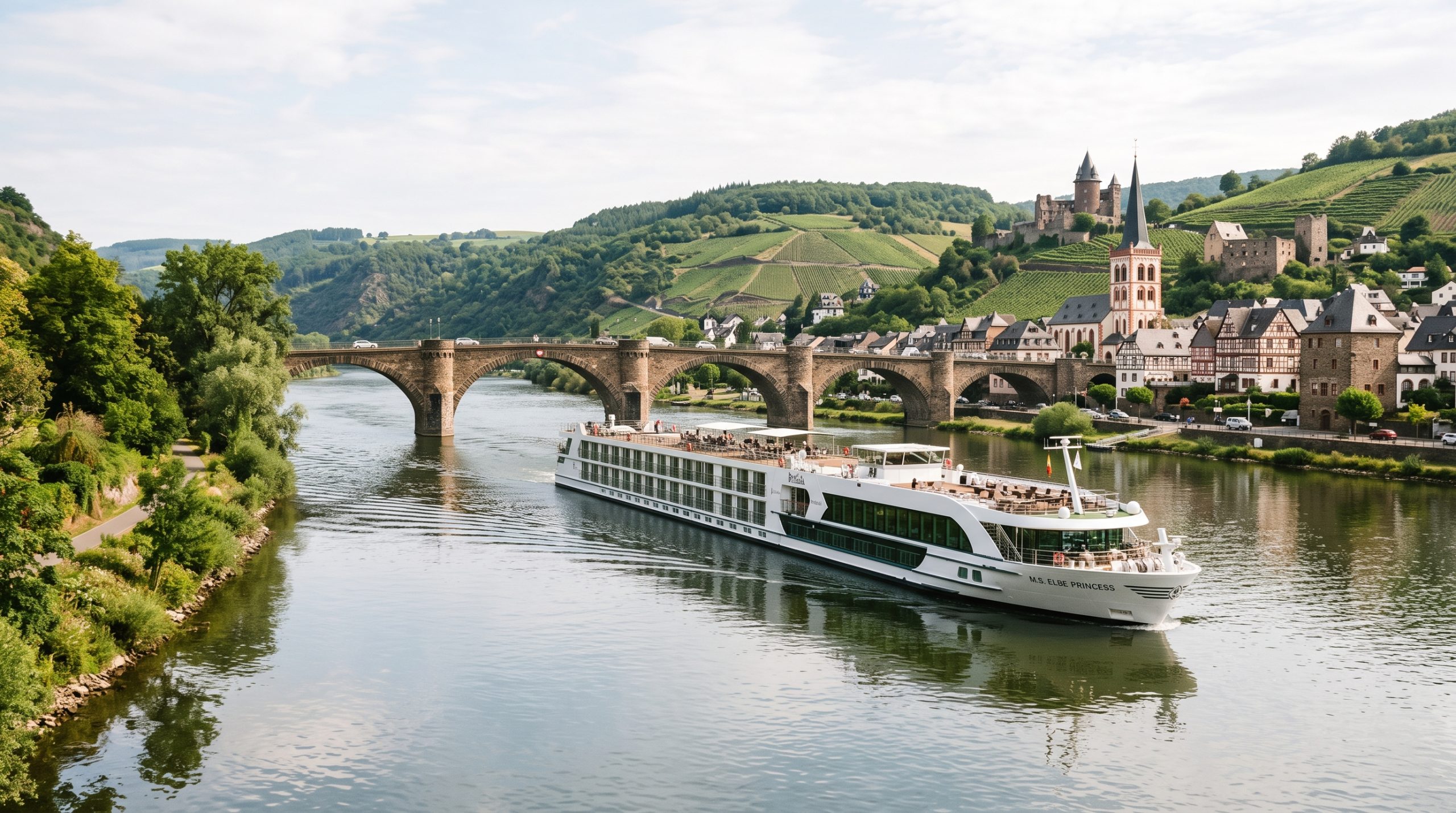
If you’re considering a European river cruise, you may have come across headlines about changing water levels on the Rhine, Danube, or other European rivers. European river cruise water levels can fluctuate throughout the year, and unusually low or high water can occasionally affect navigation and itineraries.
For travelers planning a bucket-list river cruise, those headlines naturally raise questions.
Will my river cruise still sail? Could my itinerary change? Is there a “best” time to cruise when water levels are more predictable?
The reassuring answer is that European river cruising remains one of the most beautiful and immersive ways to experience the continent. But you should understand one important thing before you go: unlike an ocean cruise, the river itself is part of the journey, and rivers are constantly changing natural environments.
Water levels rise and fall throughout the year. Most of the time, river cruises operate exactly as planned. Occasionally, however, conditions require cruise lines to make adjustments.
Understanding what can happen, and how experienced river cruise companies respond, can help you plan your journey with realistic expectations and greater peace of mind.
Why Do European River Cruise Water Levels Change?
River levels are influenced by a combination of rainfall, snowmelt, temperature, drought and broader weather patterns throughout a river’s watershed. That means conditions aren’t necessarily the same along an entire river.
The Rhine, for example, stretches hundreds of miles through Europe. One section can experience navigation challenges while another remains perfect for navigation. The same is true along the Danube and other European waterways.
Conditions can also change relatively quickly, as rainfall in one part of a river’s watershed can take days to work its way downstream and influence water levels in entirely different regions. Because of this interconnected system, river conditions are constantly in motion rather than fixed at any given point in time.
This is one reason predicting river conditions months, or even weeks, in advance is difficult. And importantly, both low and high water can affect river cruising.
What Happens When River Levels Are Too Low?
River cruise ships are specifically designed with relatively shallow drafts (the vertical distance from the waterline to the lowest point of the hull), allowing them to navigate waterways that larger vessels could never access. There is still, however, a minimum amount of water required for a ship to safely navigate. During extended periods of hot or dry weather, certain sections of a river can become too shallow for a particular vessel to pass safely.
When that happens, the cruise line may adjust the itinerary, dock in an alternative location, substitute an excursion, transport guests by coach around an affected stretch of river or transfer guests between ships positioned on opposite sides of the low-water area.
This last option is commonly called a ship swap.
Some river cruise companies operate similar or identical ships along the same waterways, giving them additional flexibility when a particular section becomes temporarily difficult to navigate.
In more significant situations, an itinerary may be shortened or substantially modified, and occasionally a sailing may need to be canceled.
What Happens When River Levels Are Too High?
Low water tends to receive more attention, but unusually high water can affect river cruises too.
Periods of heavy rain or rapid snowmelt can cause rivers to rise. When that happens, the concern isn’t necessarily whether there is enough water beneath the ship.
Sometimes there is simply too much water above it.
River cruise ships travel beneath numerous bridges, and when a river rises significantly, there may not be enough clearance for a ship to safely pass underneath.
High water can also affect locks, docking locations and access to certain ports. In more severe situations, local authorities may temporarily restrict navigation along sections of a river.
Just as with low water, cruise lines may respond by changing docking locations, rearranging excursions, using ground transportation, modifying the sailing route or transferring guests between ships.
Can a River Cruise Be Canceled Because of Water Levels?
Yes, a European river cruise can occasionally be canceled because of high or low water levels, but cancellation is not necessarily the first, or most common, response to changing river conditions.
Cruise lines have several ways to adapt when a particular section of a river becomes difficult to navigate. Depending on the situation, they may modify the itinerary, change docking locations, arrange alternative excursions or transportation, or transfer guests between ships.
The exact response depends on the river, ship, itinerary, severity and duration of the conditions, and the cruise line’s operational capabilities.
This is one reason we believe it’s important to look beyond the itinerary itself when choosing a river cruise. Understanding how a cruise line manages unexpected changes can be just as valuable as comparing cabins, excursions and destinations.
Is There a Best Time to River Cruise to Avoid Water-Level Problems?
This is one of the most common questions travelers ask, and unfortunately, there isn’t a simple answer. No month or season can guarantee ideal river conditions.
Seasonal patterns certainly exist, but weather doesn’t follow a perfect calendar. A particularly dry summer, unusually wet spring, heavy rainfall or changing snowmelt can create conditions that differ dramatically from one year to the next.
That doesn’t mean timing isn’t important. It absolutely is.
When helping clients choose when to travel, we consider the experience they’re looking for- Christmas markets, spring landscapes, summer sightseeing, fall foliage, wine harvests, and temperatures- along with the characteristics of the river and itinerary.
But we wouldn’t recommend choosing a particular month solely because someone promises the water levels will be “perfect.”
Nature doesn’t offer that guarantee.
Does a Modified Itinerary Mean Your Vacation Is Ruined?
Not necessarily.
One reason we encourage travelers to think of a river cruise as an experience rather than simply transportation is that the ship is only one part of the journey.
You’re there to wander through European cities and villages, visit historic landmarks, experience local food and wine, explore Christmas markets, see castles rising above the riverbanks and enjoy a slower way of experiencing Europe.
Many of those experiences can still happen even when the ship cannot navigate one particular section of the river.
That said, we also believe travelers deserve realistic expectations.
If uninterrupted scenic sailing is one of the most important parts of your dream trip, an itinerary involving significant coach transportation or a ship change may feel more disruptive to you than it would to someone whose priority is experiencing the destinations.
Neither traveler is wrong.
This is exactly why understanding how you want your trip to feel matters just as much as deciding where you want to go.
How Do River Cruise Lines Prepare for Changing Water Levels?
River cruise companies operate in an environment where changing water conditions are part of doing business.
They monitor river levels and weather conditions and have operational plans for situations where navigation becomes difficult. Depending on the cruise line and destination, those plans may include using ships designed with shallower drafts, repositioning vessels, arranging alternative docking locations, adjusting excursions, providing ground transportation or coordinating ship swaps.
This is where an important distinction between river cruise options can emerge. Two itineraries may look almost identical when you’re comparing them online, but the cruise lines operating them may have very different fleets, resources and contingency plans.
So when choosing a river cruise, the question shouldn’t only be:
“Which river and itinerary do I like?”
It should also include:
“How does this cruise line handle the unexpected?”
That is an important consideration when you’re investing in a significant vacation.
Should Water Levels Make You Reconsider a European River Cruise?
For most travelers, no.
Changing water levels are part of river cruising, just as weather can affect flights, ocean cruises, tours and nearly every other form of travel.
The goal isn’t to find a vacation with absolutely no possibility of disruption. It’s to plan thoughtfully for all the possibilities.
Choosing the right cruise line, understanding the itinerary, having appropriate travel protection and working with someone who can help if plans change can make an enormous difference.
And a little flexibility goes a long way.
You may have fallen in love with a photograph of a particular village or imagined sailing beneath a certain castle at sunset. Those moments are wonderful, but no river itinerary can guarantee that every day will unfold exactly as printed months, or sometimes years, in advance.
A well-planned journey leaves room for the unexpected without allowing it to define the entire experience.
What If You Already Have a River Cruise Booked?
First, don’t panic because you’ve seen a headline about high or low water levels somewhere in Europe.
A report about the Danube, or even a specific section of the Danube, doesn’t automatically mean your cruise will be affected.
Conditions can vary by river, region, ship and sailing date, and cruise lines monitor those conditions closely. Because water levels can change, significant operational decisions may not be made until much closer to departure.
If you’ve booked your river cruise through Serreis Travel, this is also where having a travel advisor becomes particularly valuable. Rather than trying to interpret river gauges, weather reports, news stories and online forums yourself, we can help determine what information actually applies to your particular sailing, communicate with the cruise line when necessary and help you understand your options if something changes.
European River Cruise Water Levels: Frequently Asked Questions
What happens if river levels are too low for my river cruise?
If part of a river becomes too shallow for a ship to navigate safely, the cruise line may modify the itinerary, use an alternative docking location, arrange coach transportation or, in some circumstances, transfer guests to another ship. The response depends on the specific river, itinerary, ship and conditions.
Can high water affect a European river cruise?
Yes. High water can reduce the clearance beneath bridges and affect locks, docking locations and navigation. Cruise lines may adjust an itinerary or use alternative transportation when necessary.
What is the best month for European river cruise water levels?
There isn’t one month that guarantees ideal river levels. Rainfall, snowmelt, drought and temperature patterns vary from year to year, so travelers should choose their travel dates based primarily on the destinations and experience they want rather than trying to predict water levels months in advance.
Can a river cruise be canceled because of water levels?
Yes, although cancellation isn’t the only option available to cruise lines. Depending on the circumstances, a cruise line may be able to modify the itinerary, change ports, use ground transportation or arrange a ship swap instead.
Are Rhine and Danube river cruises affected by water levels?
They can be, but conditions can vary considerably along different sections of both rivers. A water-level issue in one location doesn’t automatically mean every Rhine or Danube river cruise is affected.
The Bottom Line
European rivers naturally rise and fall, just like rivers in other parts of the world. It’s simply part of nature.
Sometimes they’re unusually low. Sometimes they’re unusually high. Most of the time, they’re somewhere in between, and river cruises continue operating as planned.
Water levels are something travelers should understand, not fear.
The extraordinary appeal of European river cruising hasn’t disappeared. You can still wake up in the heart of Vienna, sail past vineyards along the Rhine, explore centuries-old villages, visit Christmas markets glowing beneath twinkling lights and unpack once while Europe unfolds outside your window.
What matters is approaching the experience with informed expectations and thoughtful planning.
Choose the right itinerary. Choose the right cruise line. Understand how that cruise line responds when conditions change. Protect your investment appropriately. And have someone in your corner who can help you navigate the details if the unexpected happens.
Because the goal isn’t simply to book a river cruise.
It’s to create a journey you’ll remember for all the right reasons. After all, the most meaningful travel memories aren’t only about where you go, they’re about who you share the journey with.
Thinking About a European River Cruise?
If the Rhine, Danube or another European river has been on your travel wish list, don’t let headlines about water levels make the decision for you.
At Serreis Travel, we help busy professionals and retired couples navigate the choices behind luxury river cruising, from selecting the right river and cruise line to considering timing, cabins, pre- and post-cruise stays, travel protection and the details that help make the journey feel seamless.
Explore our river-cruise resources and destination guides, or schedule a complimentary consultation to begin planning your journey.
Journeys with a Greater Purpose.